
Patio Andaluz and the Westside Sound
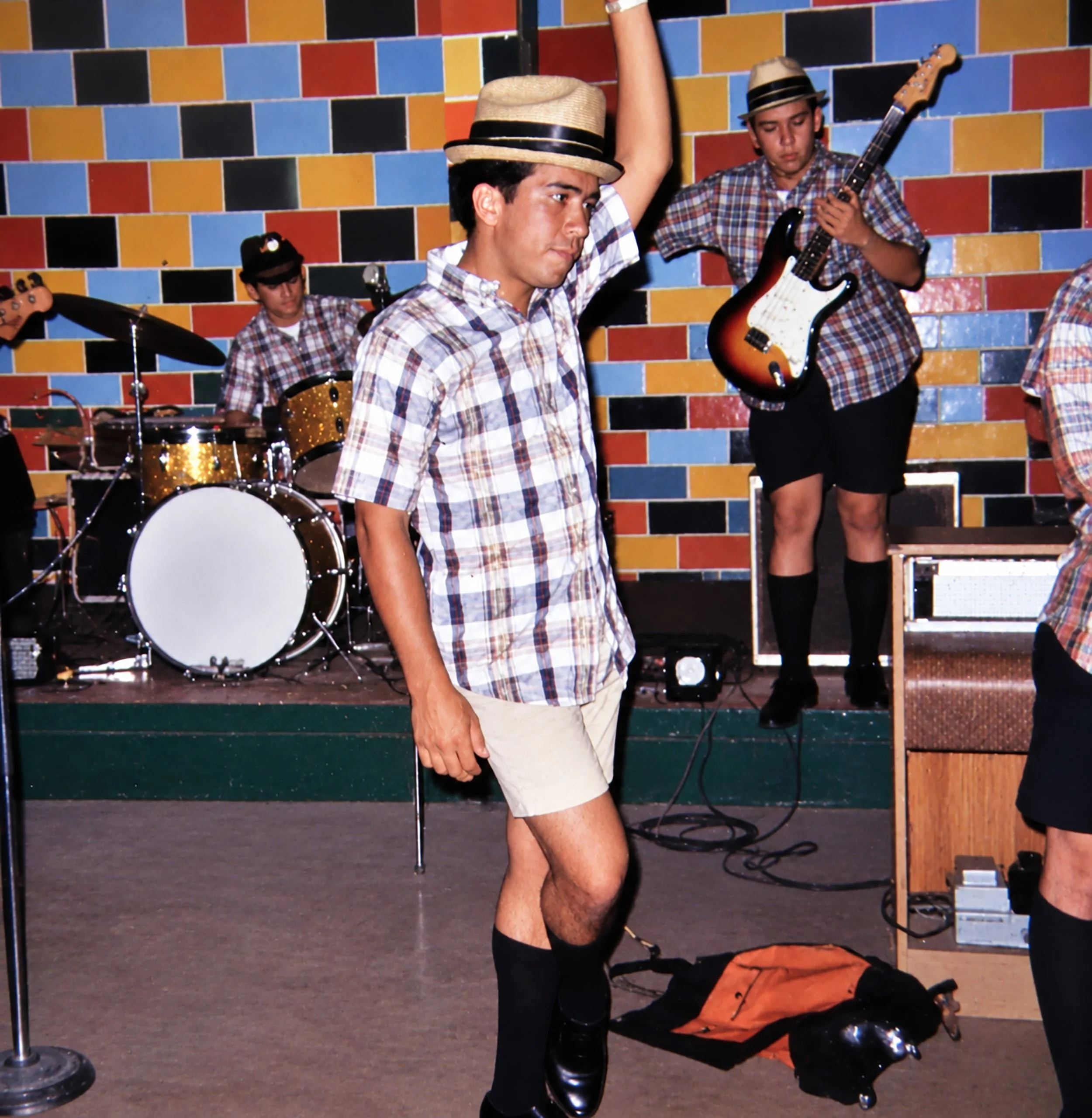
Sunny Ozuna doing a sound check at Patio Andaluz in 1964. Image courtesy of the photographer Ramón Hernández.
Patio Andaluz and the Westside Sound
Patio Andaluz was one of the key sites in San Antonio’s music scene during the 1950s and 1960s. Named after inner courtyards found in the traditional architecture of Southern Spain, this outdoors venue hosted dances with live music, featuring bands that created what is known as the Westside Sound, Chicano Soul, Brown Eyed Soul Music, and according to the musicians themselves the San Antonio Sound.[1] Patio Andaluz was located on the back patio of a two story multi-use commercial building and was accompanied by an interior venue space called Salón Social Tea (pronounced Teh-ah) located on the second floor of the building.
The building
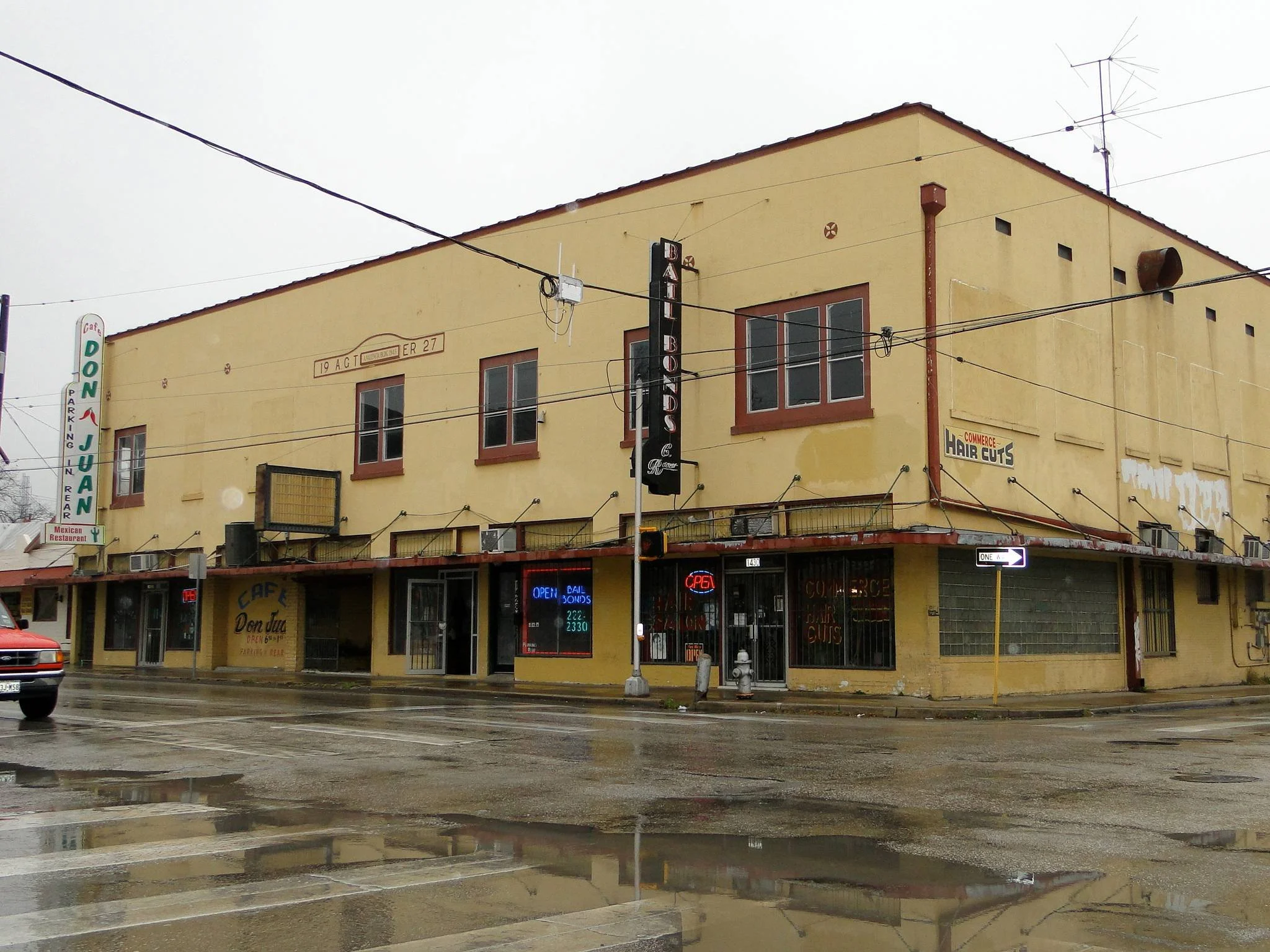
Building located at 1422 W Commerce Street. Salón Social Tea was located on the second floor. The building currently houses Café Don Juan.
The building itself has minimal Spanish Revival details large metal awnings providing shade to customers on the sidewalk. Patio Andaluz does not exist anymore as it used to. It is now a parking lot with a low brick line on the ground indicating the location of the historic walls. The main dance floor is still visible at the center of the space. Two columns marking the entrance remain, facing N Colorado Street. During its heyday, Patio Andaluz was protected by walls, faced in brightly colored tiles and topped by barrel tiles. An archway stood where the two columns are located, welcoming the eager dancers as they entered the venue. There were roofed booths lining up the two north-south walls and a bandstand for performing artists and other events.
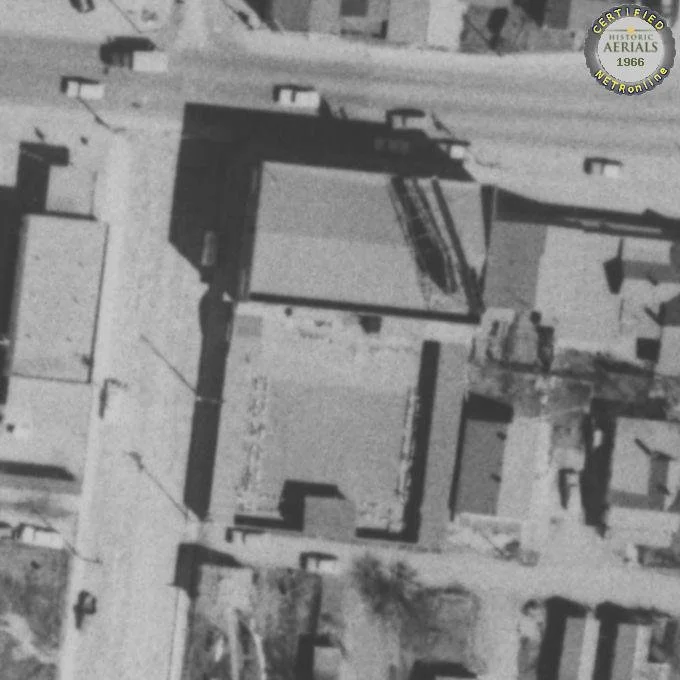
An aerial photograph of Patio Andaluz taken in 1966. Credit: Historic Aerials.
Valencia Family
Antonio and Inez F. Valencia purchased the property in 1944 soon thereafter opened two activity venues. Patio Andaluz was located on the backyard of the property and Salón Social Tea on the second floor. Antonio G. Valencia Jr. was born in Mapimi, Durango, Mexico and came to the United States in 1911.[2] He worked as a day laborer and eventually opened Valecia Grocery Store at 219 N San Marcos on the Westside. According to the US Census of 1940, Antonio worked around 60 hours a week at his business, saving money to reinvest in other properties.[3] According to newspaper articles from the time, Antonio was involved in various civic organizations and helped to coordinate community events around holidays and for fundraising. In 1939, Mr. Valencia was the treasurer for the Social Club “tea” and participated in the Montecarlo Social Club and San Antonio Charros Association.[4]
The building with the current address of 1422 W Commerce Street (on the southeast corner of W Commerce and N Culebra streets) was built in 1927 as a multi-use commercial structure. The building was designed to house multiple businesses from the very beginning and over the years these have included barbershops, bars, restaurants, a furniture store, drug stores, and even a skating rink on the second floor. It is best known for the event venues, but hosts Café Don Juan, a local restaurant that continues to serve as a community cornerstone serving breakfast and lunch.
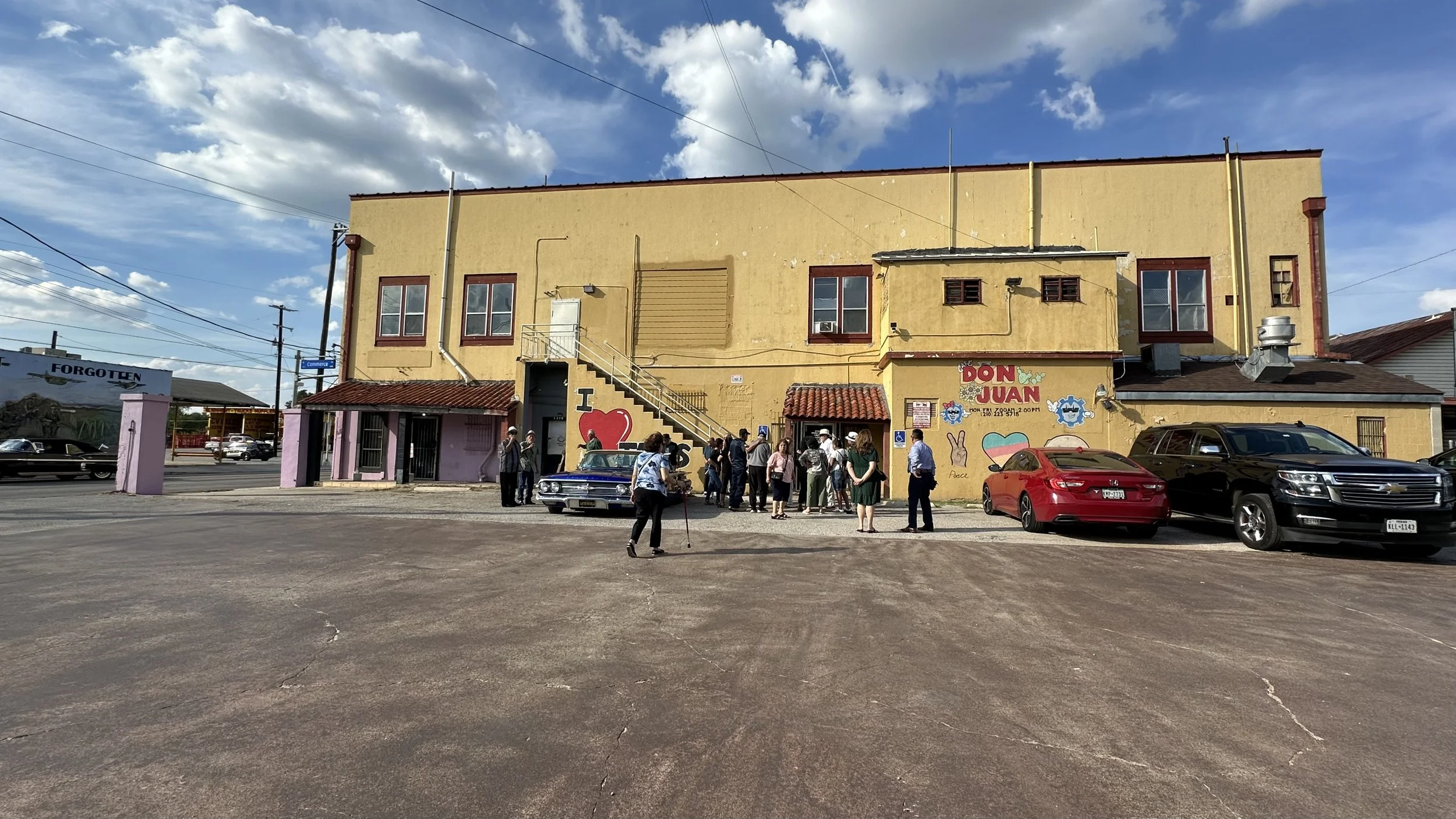
Patio Andaluz was located in what is now the parking lot of Café Don Juan. The entrance columns, dance square, and remnants of the original walls still remain.
Patio Andaluz and Salón Social Tea
When Patio Andaluz and Salón Social Tea opened, they were first used to host dances and events sponsored by different social clubs. Many of the events were tied to seasonal holidays. On September 1951 Patio Andaluz was one of six places that coordinated a weekend long celebration of Mexican Independence Day.[5] Patio Andaluz hosted a dance with live music from the trio “Los Compadres” and superstar of the Mexican Golden Age of Cinema Pedro Infante. In December of that year, Antonio Valencia sponsored a Saturday night Toy Dance at Salón Social Tea as Christmas toy collection drive for children in the Westside. The entry fee was one toy per person.[6] Even sports organizations rented out Patio Andaluz. The Thunderbird softball team at Kelly Airforce Base hosted a benefit dance at Salón Social Tea in 1960.
Esperanza Mendoza Acosta (center) was one of the many people who held her wedding reception at Patio Andaluz on September 21, 1968.
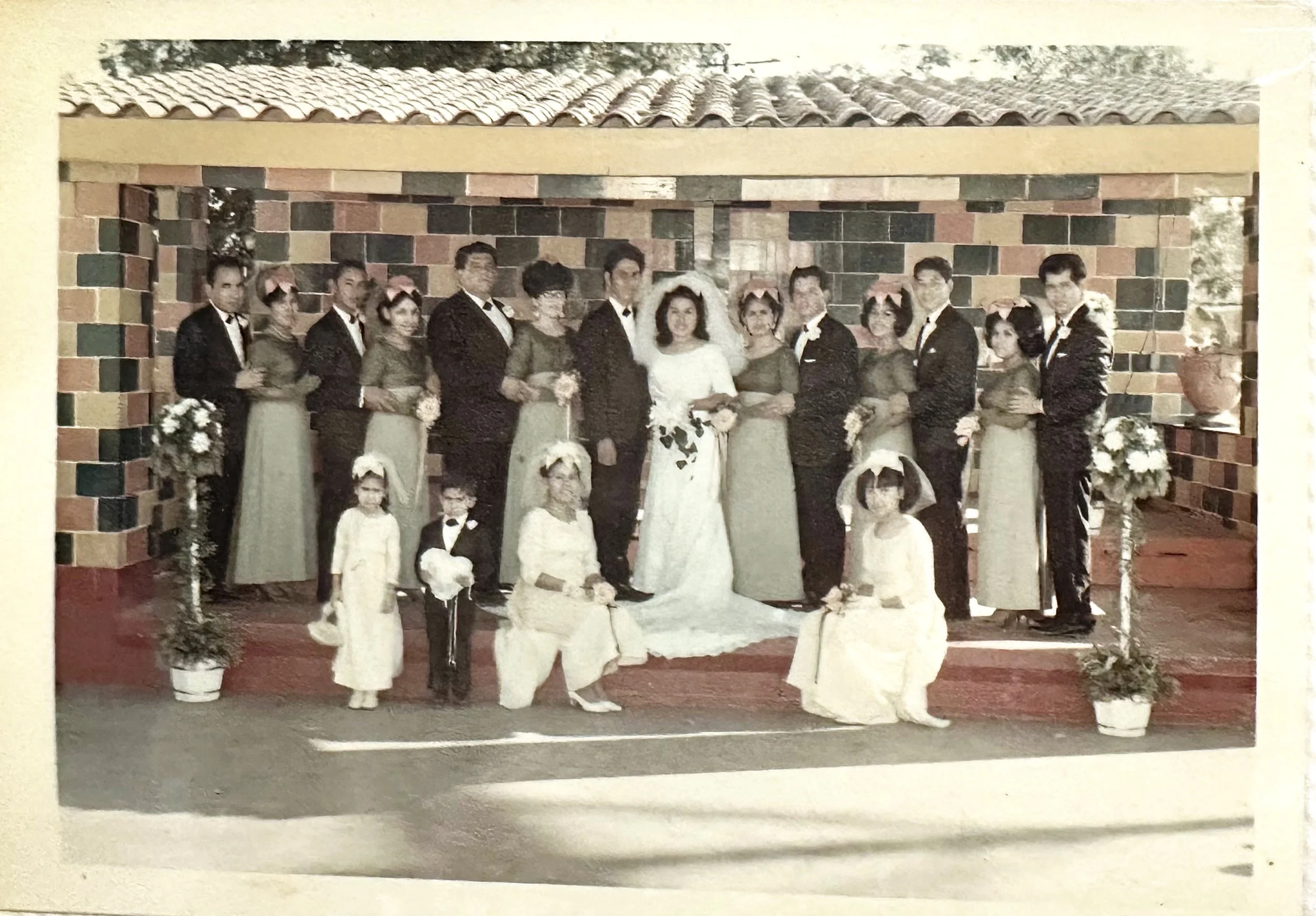
Esperanza Mendoza Acosta (bride on the center) celebrating her wedding on September 21, 1968 at Patio Andaluz. Photograph courtesy of Esperanza Mendoza Acosta.
Patio Andaluz and Salón Social Tea were witness to many life celebrations such as the receptions for quinceañeras and weddings.[7] [IMAGES] Local newspapers announced the life events of Westside’s community members celebrated at the venues. People not only celebrated their marriages but met their partners as well. Antonio Valencia’s son, also called Antonio, met his wife at one of the Patio Andaluz dances.[8] The venue was also a prominent cultural and political meeting space in the 1950s. According to the San Antonio Light Good Government league candidates campaigned at the venue in 1955.[9]
Westside Sound
Patio Andaluz became a hit in the following years, hosting dances with live music, creating a fun place for San Antonio’s teens to dance, listen to cutting edge music, and foster memories. Many of the bands that performed at Patio Andaluz left a lasting legacy that went far beyond the courtyard’s walls.
Groups such as the Royal Jesters, Rudy & the Reno Bops, Sunny and the Sunliners (previously Sunny & the Sunglows), Henry & His Kasuals, Little Henry & the Laveers, and the Dreamliners (previously the Royaltones), amongst others developed what became known as the Westside Sound or Brown Eyed Soul music.
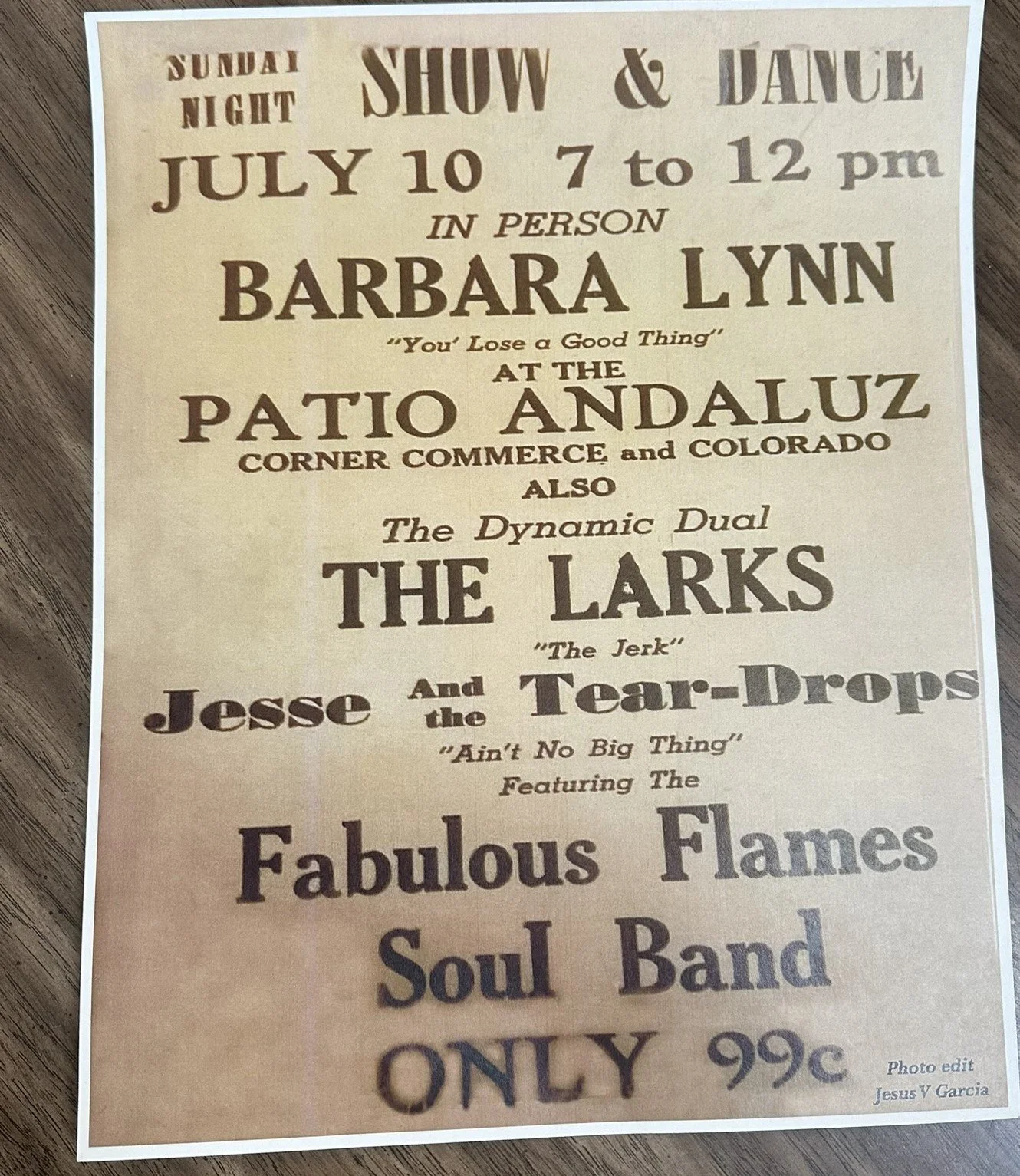
Copy of of a flyer announcing a live performance by Barbara Lynn, The Lars, Jesse and the Tear-Drops and the Fabulous Flames Soul Band. The photo edit is credited to Jesus V Garcia
These groups started off as Mexican American and Black teenagers from all San Antonio, but especially from the Westside and Southside experimenting. The young musicians incorporated Doo Wop, Soul, funk, Rock & Roll and eventually added Conjunto music to their repertoire, developing the musical style over time. They developed what is now known as the Westside Sound, which was not The Royal Jesters were students at Sydney Lanier High School located on the Westside when they met and began performing.[10] They leased Patio Andaluz in the 1960s to other bands and used it as their main performance venue. The Royal Jesters also rented Salon Social Tea to other bands for rehearsals.
The space became a live music venue with a cultural impact that sat between the school sponsored dances at St. Francis, Brackenridge, and Lanier, amongst others, and more adult night clubs such as the Keyhole Club and Lerma’s Nite Club. High schoolers and other young people found out about upcoming dances from flyers and the Top Teen Tunes Show on the Spanish language KUKA radio station announcing the date, time, musicians, cost, and sponsors. Dances with live music were often sponsored by teen car clubs and the bands themselves, earning money in the process and collaborating with each other. If dances were rained out, the venue was shifted from the outdoors Patio Andaluz to Salón Social Tea upstairs.
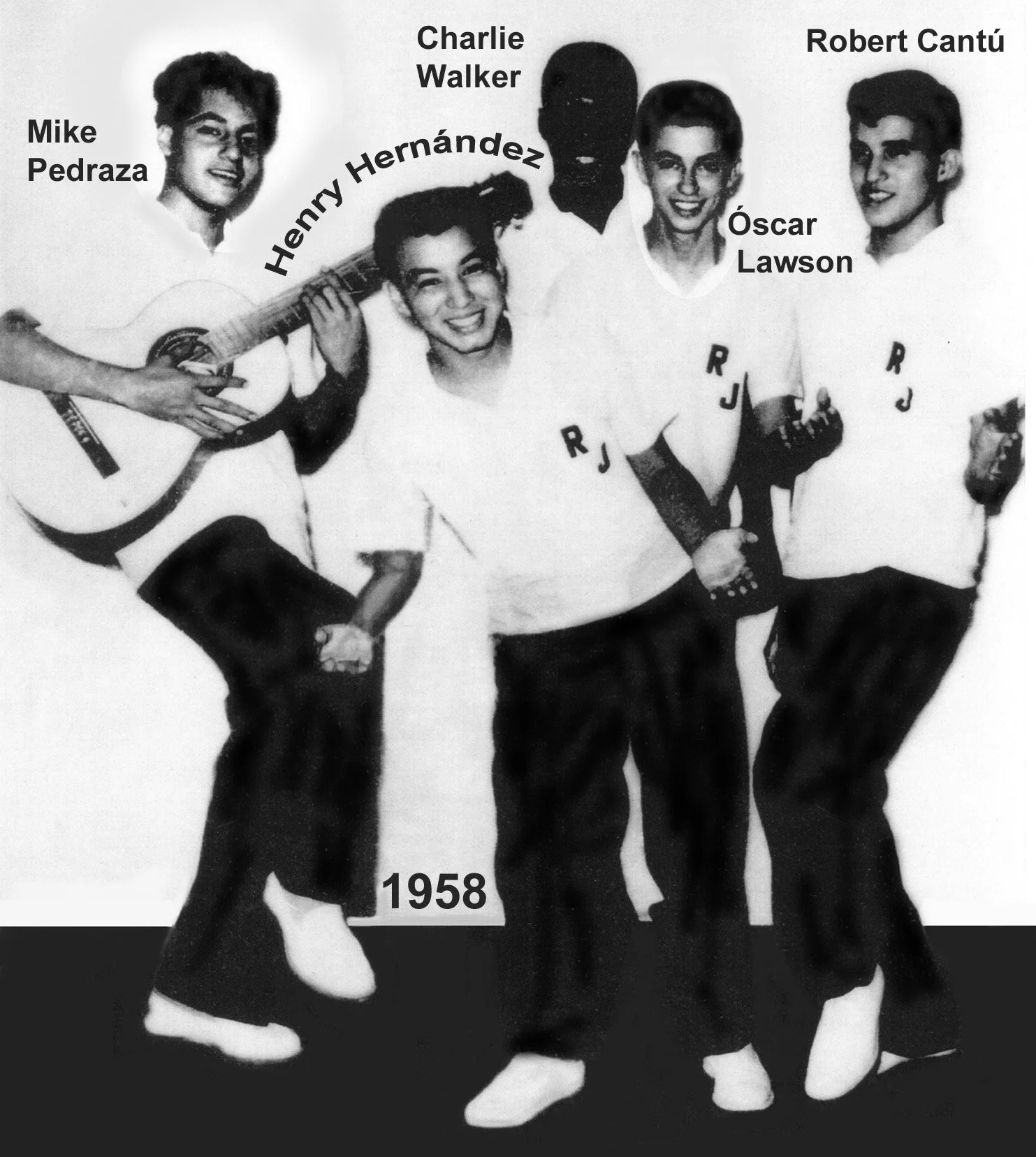
A 1958 photo of the Royal Jesters (left to right) Mike Pedraza, Henry Hernández, Charlie Walker, Oscar Lawson and Robert Cantú. Photo courtesy of Ramón Hernández.
Prominent rhythm and blues performers such as Barbara Lynn performed at Patio Andaluz as well, coming in from other parts of Texas. These and other groups and musicians had an impact on the legacy of Chicano music in the region, and some groups had national hits such as Sunny and the Sunliners with the song “Talk to Me”.
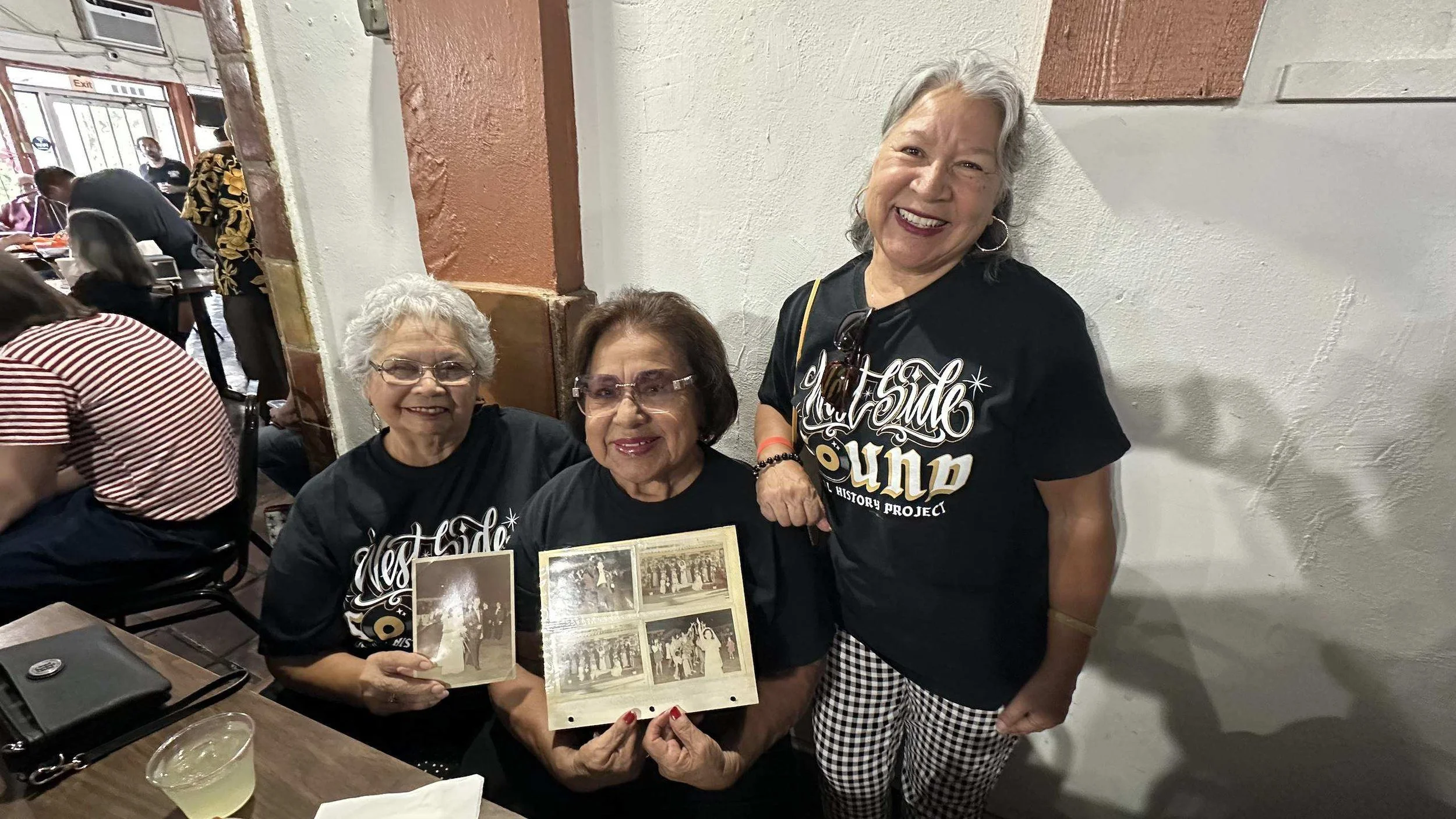
The building was eventually sold and has housed Café Don Juan, a Mexican breakfast and lunch restaurant ever since. The owners and patrons of the café maintains the storied legacy of the building alive, as the same community that once danced in the backyard continues to each, chat, and share memories in the building. In 1993, the Esperanza Peace and Justice Center hosted a dance in the historic Salón Social Tea in order to raise funds for their center’s relocation.[11] The legacy lives on through memorial concerts throughout San Antonio, through periodic reunions, the research by the West Side Sound Oral History Project, Henry Peña’s radio shows, events at the neighboring Jaime’s Place, and the people enjoying and sharing the music that was once sang live and danced to at Patio Andaluz. Historians such as Jesse Garcia and Ramón Hernández, amongst many others, are
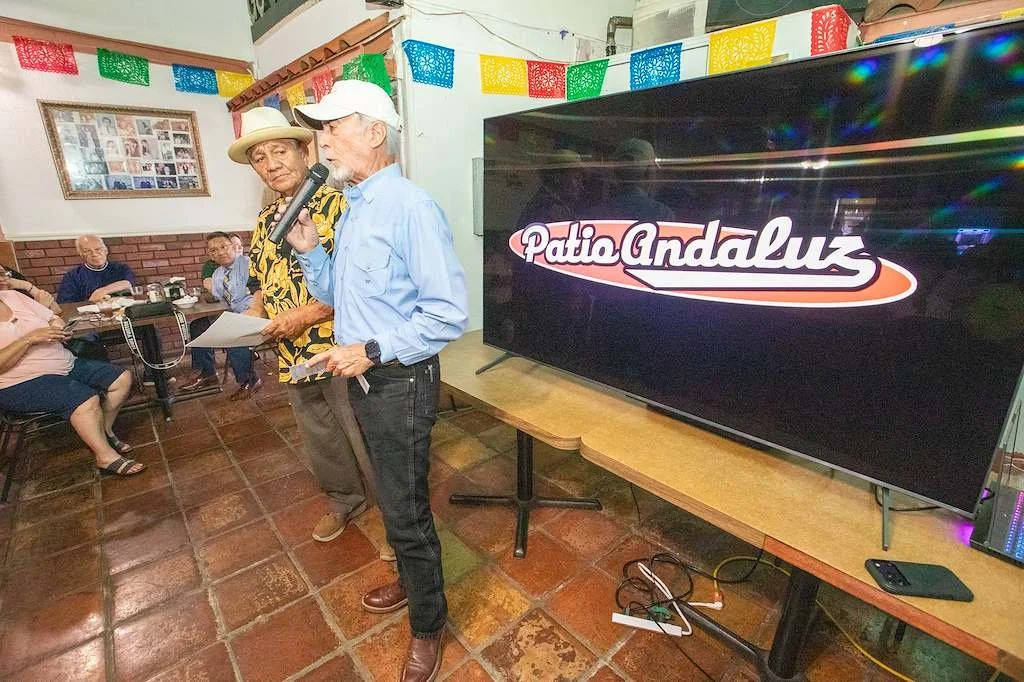
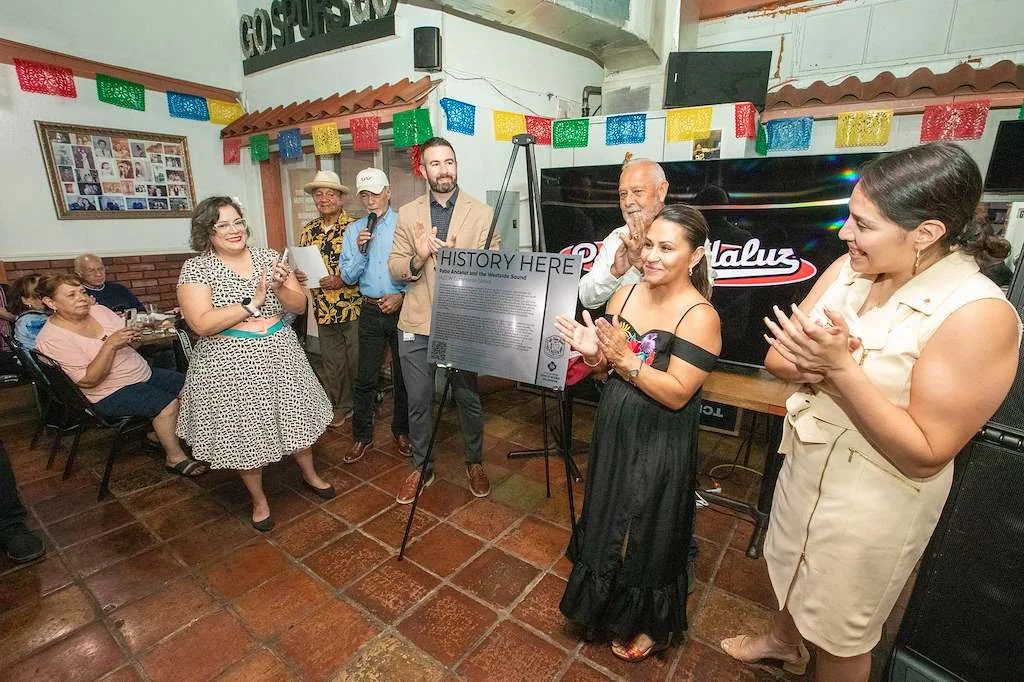
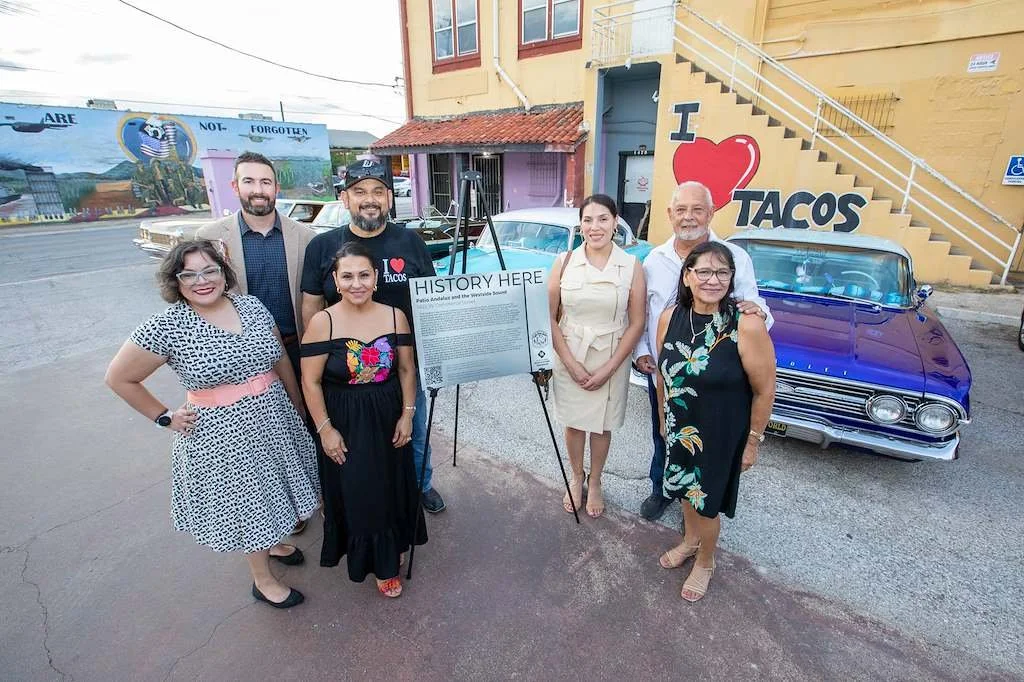
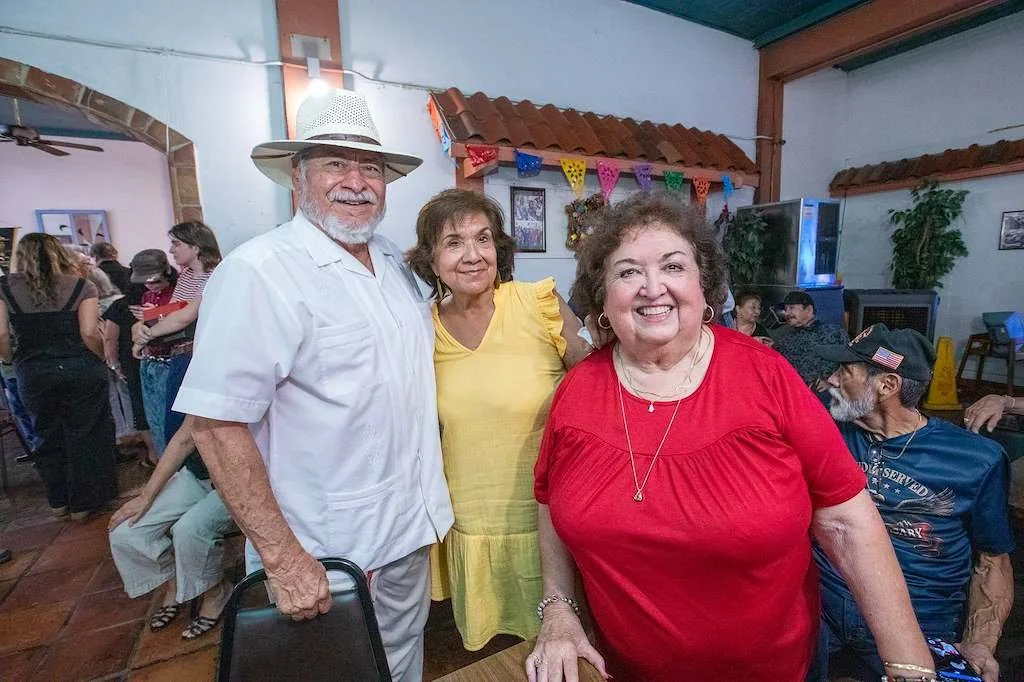
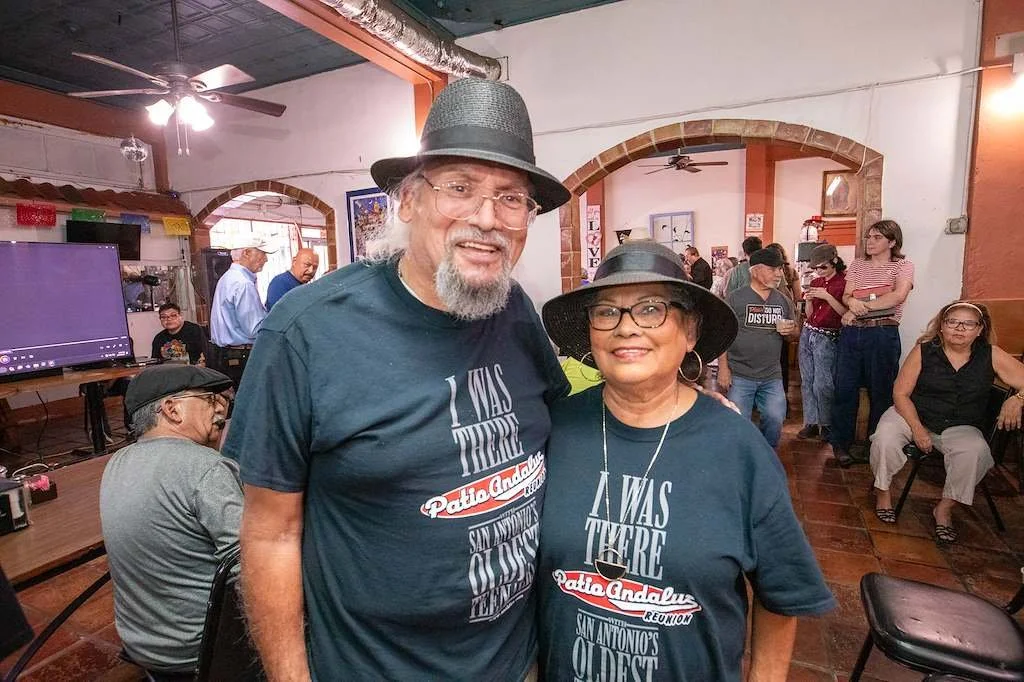
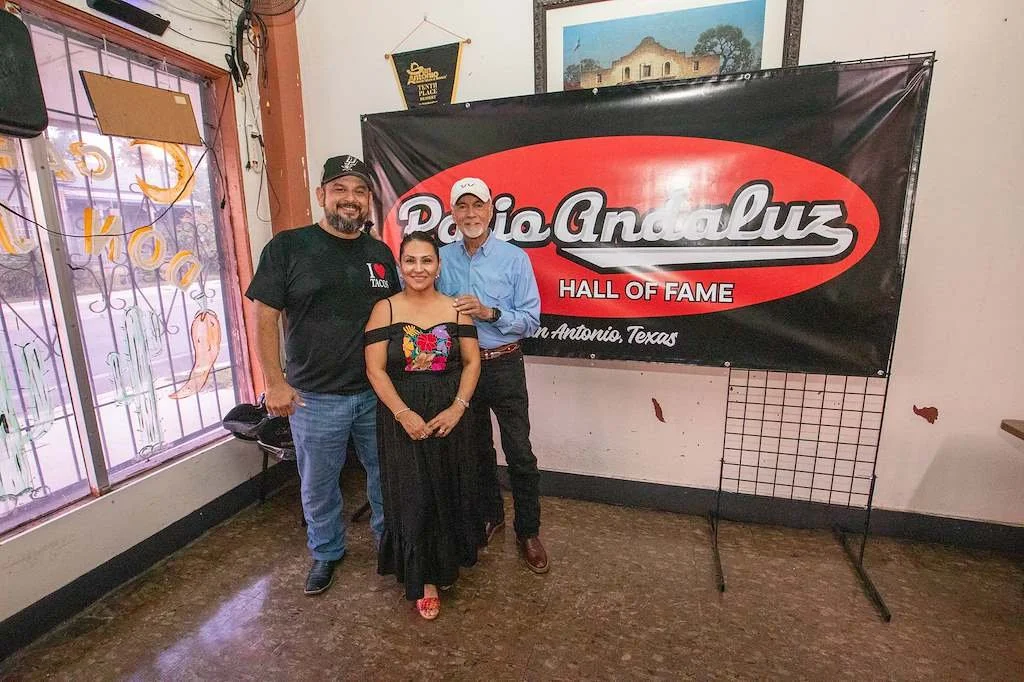
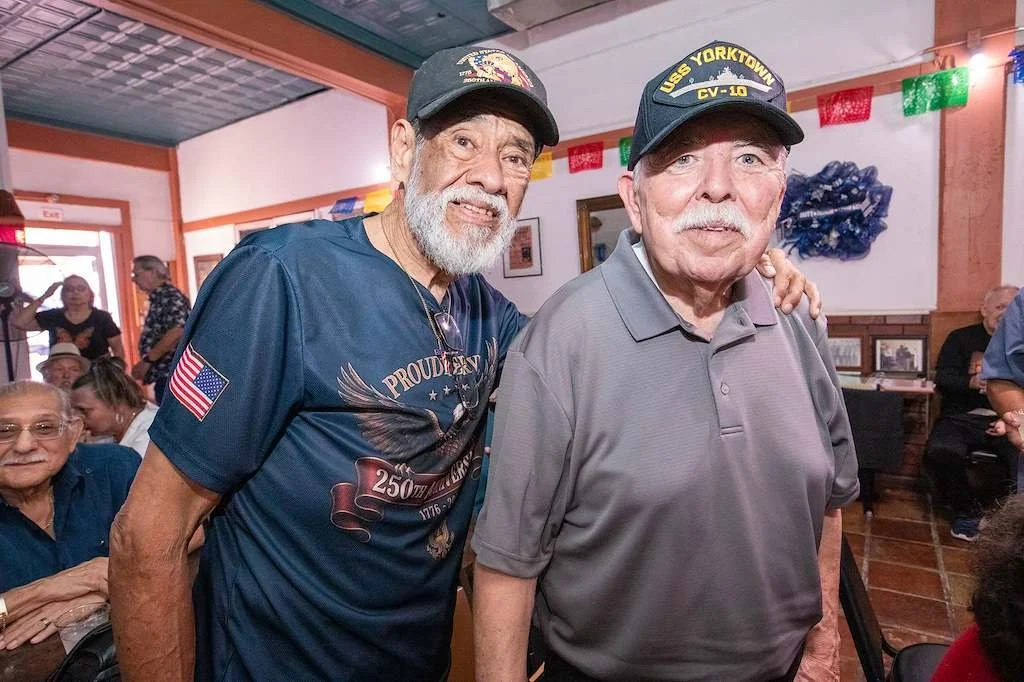
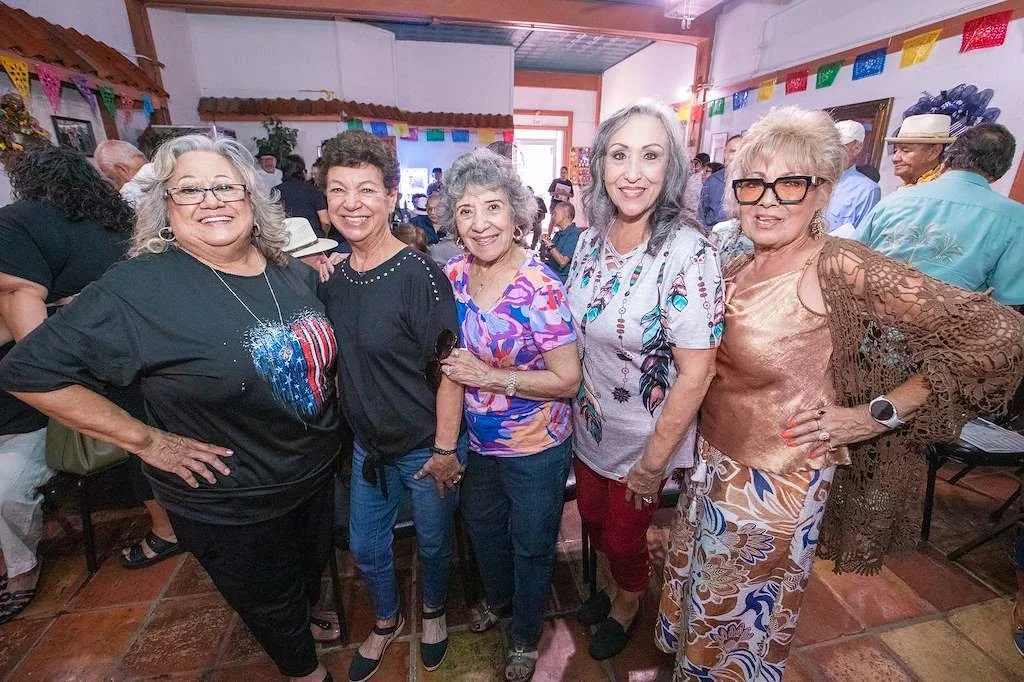
On September 24, 2026 the Office of Historic Preservation unveiled a History Here marker to celebrate the legacy of Patio Andaluz at Café Don Juan accompanied restaurant’s owners, Westside Sound leaders, and community members. The West Commerce Business Alliance, a group made up of local business owners, wanted to commemorate and spread awareness of the rich cultural history of West Commerce Street. The History Here marker makes the site’s history accessible to passers-by, creating a visual reminder of a space that no longer exists.
Jenny Villegas and her family, the owners of 1422 W Commerce Street and Café Don Juan, hosted the unveiling event inside of the restaurant. Cory Edwards, interim director of the Office of Historic Preservation provided an introduction followed by District 5 Councilwoman Teri Castillo. Jenny Villegas and her family provided their story with the storied building. Henry Peña provided historical context and screened his documentary “Untold Stories / Patio Andaluz”. Jaime Macias hosted an afterparty at Jaime’s Place afterwards.
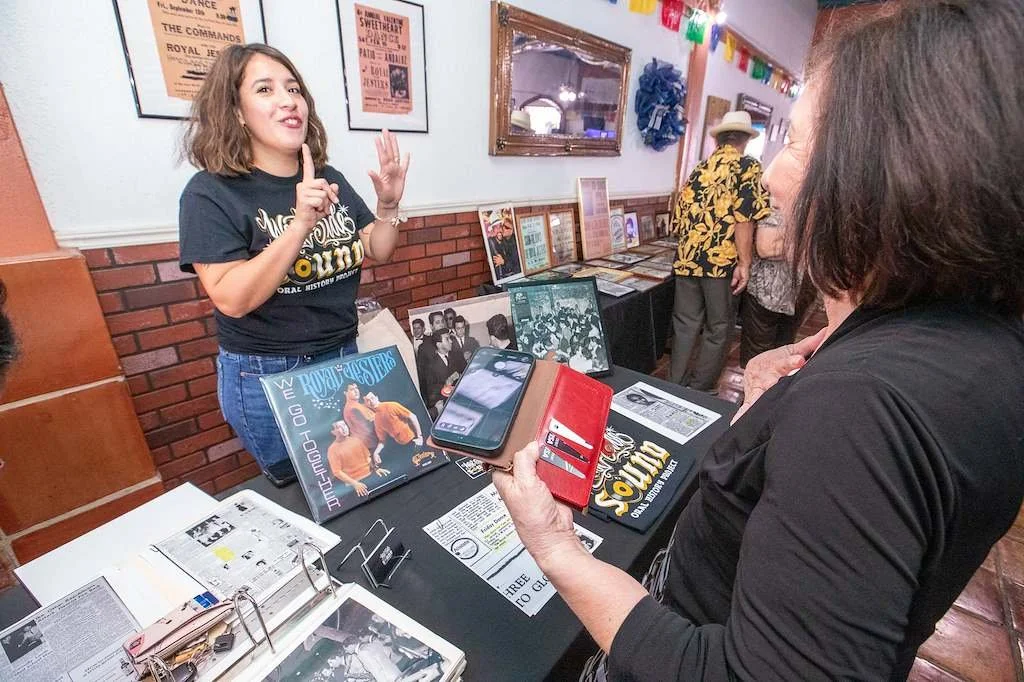
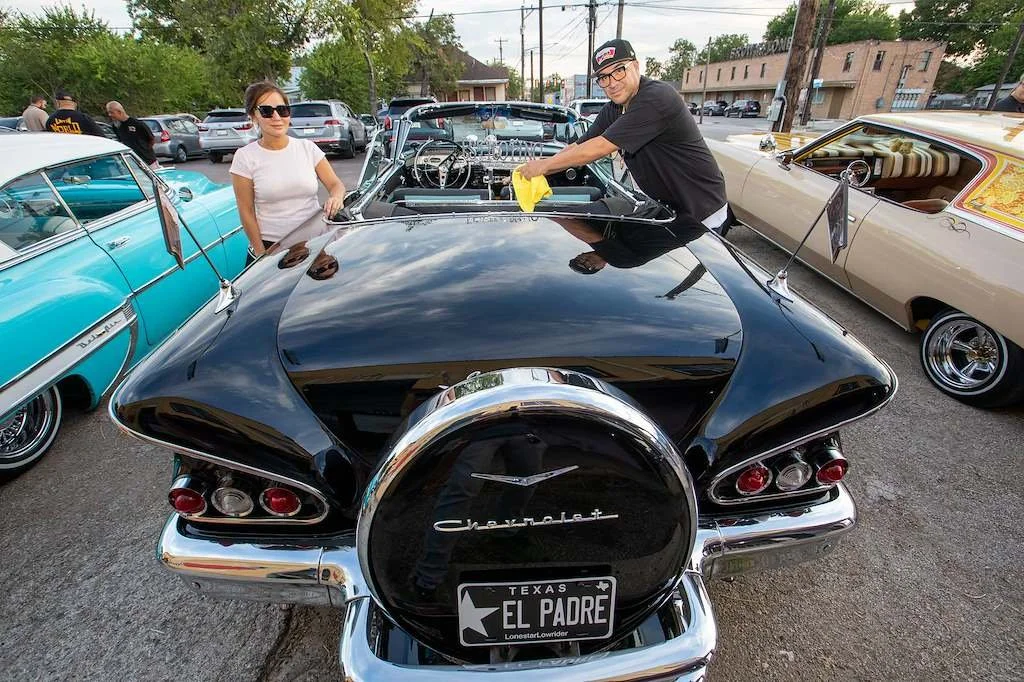
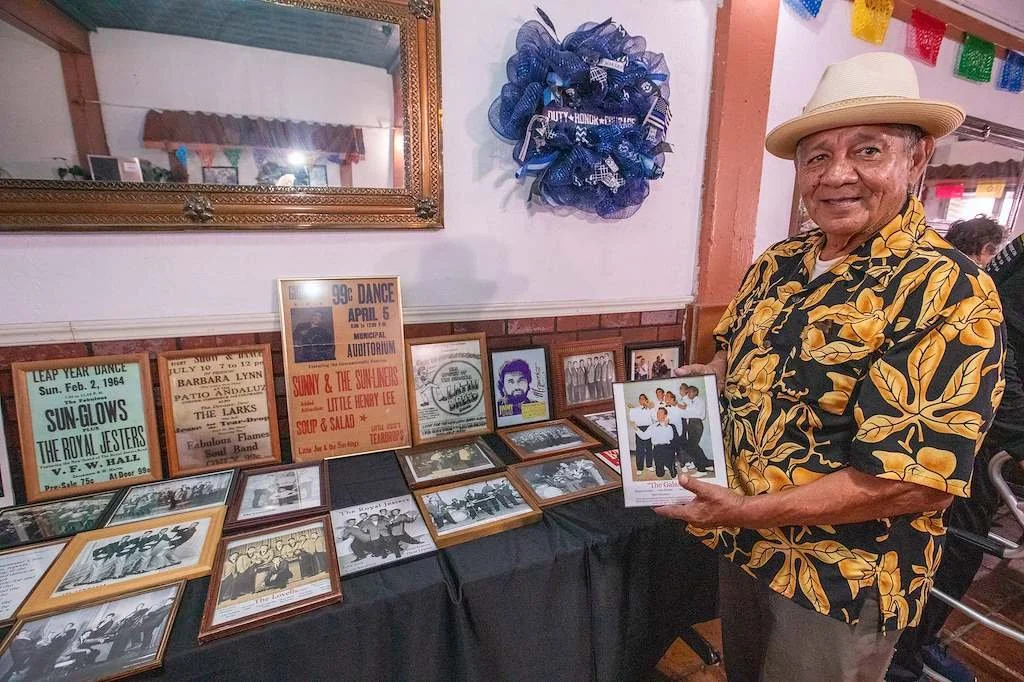
Representatives of the Latin World and Estilo Fino car clubs were present with lowriders, celebrating the car culture that was integral to the Westside Sound. The West Side Sound Oral History Project and historian Jesse Garcia tabled, bringing records and original poster prints.
The marker will be placed on the property by Café Don Juan’s owners.
Learn about OHP’s Local Markers Program, which includes the History Here program, and watch all episodes of There’s A Story Here.
OHP will share photos of you with the marker if you tag @SAPreservation on social media!
Notes
[1] Historian and photographer Ramón Hernández made the case that although associated with the West Side, the musical sound was only possible with the participation of youth from all over San Antonio.
[2] U.S. Department of State, “Antonio Valencia.” Petition for Naturalization No. 9292, Under General Provisions of the Nationality Act of 1940 (Public, No. 853, 76th Cong.), December 13, 1940.
[3] U.S. Census Bureau, “Antonio Valencia,” 1940 United States Federal Census, https://www.ancestryheritagequest.com/search/collections/2442/records/159754450?tid=&pid=&queryId=5ac2c21c-e516-44c8-8ebe-bef8a80ae27a&usePUBJs=true, accessed on August 6, 2026.
[4] “Social Club ‘tea’”, Texas Speech Meeting. San Antonio Light Newspaper Archives November 19, 1939, 6.
[5] “'Diez y Seis' Starts Today: A three-day Mexican Independence celebration begins Friday,” San Antonio Express Newspaper, September 14, 1951, 17.
[6] “Yule Toy Party Slated,” San Antonio Light Newspaper Archives, December 6, 1951, 30.
[7] “Birthday Mass for Her,” San Antonio Light, October 8, 1957, 13. “Hernandez Marriage Solemnized,” San Antonio Express, January 6, 1964, 1-B. “Miss Aldaco, F.G. Finch Are Married,” San Antonio Express, February 18, 1958, 1-B.
[8] Beltran, Jacob, “Banker Valencia valued education, family,” San Antonio Express-News, June 27, 2013, 5B.
[9] “Shearer Vote,” San Antonio Light, April 3, 1955, 9.
[10] Ryan Boyle, “The Royal Jesters: From First to Final Valentine’s,” Numero Group, 2015. https://numerogroup.com/blogs/stories/the-royal-jesters-from-first-to-final-valentines, Accessed on August 12, 2026.
[11] “Eseranzaaid Builds Hope for the Future,” The Marquise, October 21-November 3, 1993, 3. https://digital.utsa.edu/digital/collection/p16018coll7/id/11438/rec/1, Accessed on August 11, 2026.