Black & African American Cultural Context Statement

 
Download PDF

Download the entire context statement or explore by section.


Introduction

The Office of Historic Preservation (OHP) African American Heritage Preservation Initiative aims to discover, celebrate, and protect San Antonio’s African American cultural legacy. It highlights key places, events, and traditions, including food, songs, dances, and spirituality, representing the diverse community over time. The project was completed through community engagement and thorough research on San Antonio’s Black community across local, regional, state, national, and transnational contexts. The ultimate goals are to identify and preserve African American cultural heritage resources and to build awareness, appreciation, and respect for African American cultural heritage.

Learn more
 

African american History In San Antonio

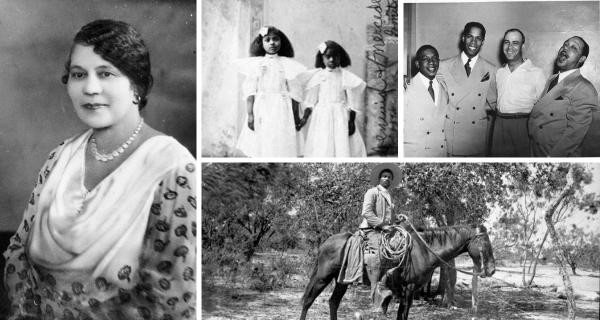
In 2018, San Antonio celebrated its Tricentennial, but a 2017 Texas Highways article overlooked contributions by Black residents, despite then-Mayor Ivy Taylor being the first African American mayor. This exclusion highlighted ongoing marginalization. Everett Fly, a landscape architect, protested and co-founded the San Antonio African American Community Archive and Museum (SAAACAM). The 2019 book '300 Years of San Antonio and Bexar County History,' edited by Claudia Guerra, features entries on Black history by Fly, Professor Mario Marcel Salas, and columnist Cary Clack. Salas also published an article on Eastside history in the San Antonio Observer. SAAACAM received a Mellon Foundation grant and partnered with the NAACP, city events, and preservation efforts, including a 2018 Black Heritage Bus Tour and a 2019 Blues Festival. The movement gained momentum in 2020 following George Floyd’s death, prompting campaigns to preserve historic sites such as the Woolworth Building. The Alamo Trust commissioned Professor Carey Latimore to produce “Civil Rights in San Antonio: WWII to Mid-1960s” in preparation for a civil rights exhibit, including the story of Alamo Joe, the Alamo's "messenger of defeat."

To grasp the importance of this twenty-first-century revival of Black culture in San Antonio, we first need to briefly explore the complex reasons behind the long history of exclusion, marginalization, and misrepresentation of African Americans in our society. To write the history of a people, their culture, and the places they inhabit, one must actively seek their presence in historical records. A dependence on the limited coverage of Black life and culture in the mainstream press has contributed to a skewed perspective. In many cases, when the experience of Black people is acknowledged, it has often been sanitized to disregard, diminish, or downplay the historical evidence of systemic racial discrimination, obstacles to economic opportunities, and restrictions to full participation in civic life.

The gaps identified in this brief history of African Americans in San Antonio highlight the need for ongoing research and for reexamining prior assumptions.

Learn more
 

Identified Values and Themes

Our approach follows the Australia ICOMOS Burra Charter, 2013, which guides cultural heritage management beyond physical evaluation. It provides standards for conserving and managing culturally significant places, including advice for owners, managers, and custodians.

 Cultural significance encompasses aesthetic, historic, scientific, social, and spiritual values, according to Article 1.2 of the Burra Charter. By examining these, we clarify why a place matters. Focusing on values rather than physical features fosters a more equitable approach to heritage management.

 These values often interconnect; for example, civil rights relate to historic, social, and spiritual values. Additional categories can be developed as we research each place.

Beyond the five core values, we identified themes for San Antonio: African American Educators, Labor and Enterprise, Religion, Music, Culture, and Residential Life and Community Growth.

Learn more
 

Methods

The City of San Antonio Office of Historic Preservation (OHP) protects the cultural resources that make San Antonio unique. OHP emphasizes and encourages understanding that San Antonio’s historic environment is a shared resource. This common heritage, built up of many layers of time and cultures, includes both tangible and intangible aspects. The concept of cultural significance is emphasized in heritage management to ensure that all cultural meanings a place may hold are recognized. Understanding a place and evaluating its cultural importance are essential tools in decision-making.

 Cultural significance is assessed through heritage values like aesthetics, historic, scientific, and social, identified via research, community input, and site visits. Community stories and archival materials are vital to this process.

 OHP follows international heritage principles from ICOMOS, including the San Antonio Declaration, Venice Charter, Burra Charter, Nara Document, and Washington Charter, among others. OHP also utilized guidance from the Department of the Interior and National Park Service’s African American Theme Study also informs the value themes. The statement organizes these by core values and related themes.

Learn more


Property Surveys and Analysis

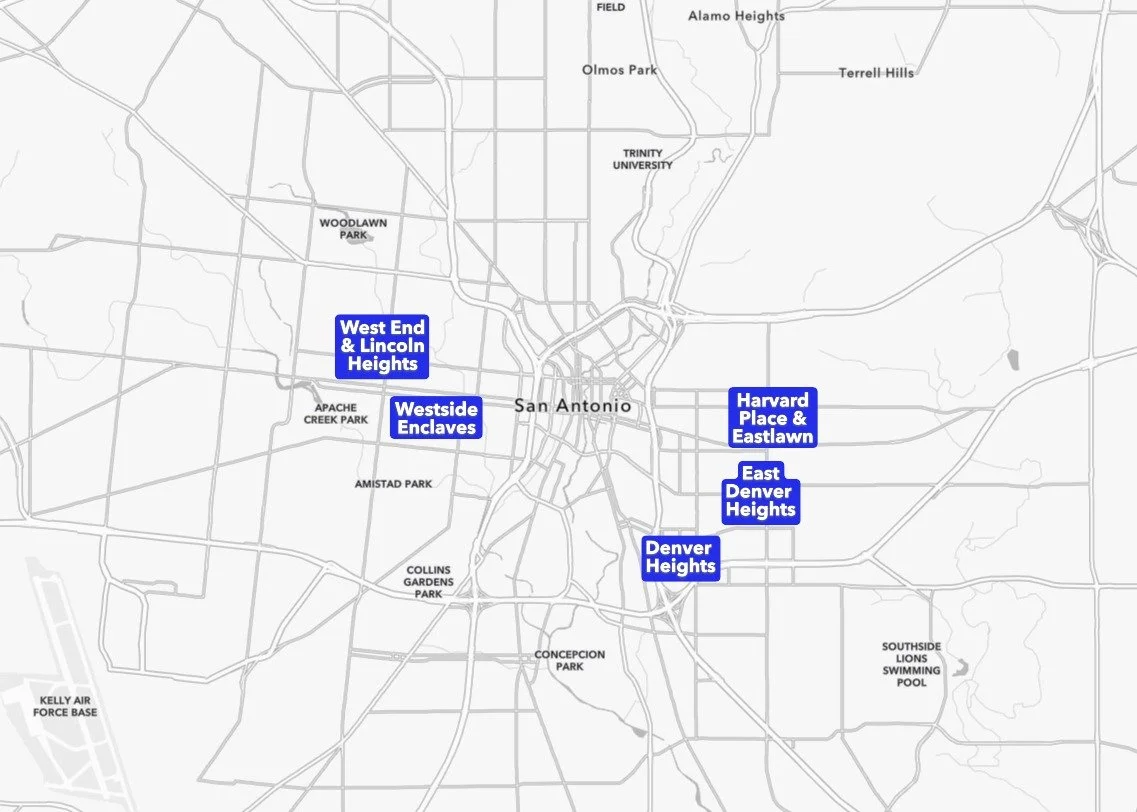
On behalf of the City of San Antonio (COSA) Office of Historic Preservation (OHP), SWCA Environmental Consultants (SWCA) completed the African American Neighborhoods Historic Resources Survey (project) for COSA within the city limits of San Antonio, Bexar County, Texas. The project involved a reconnaissance-level historic resources survey of all resources—both historic and non-historic—within five historically Black neighborhoods located within a 3-mile radius of downtown San Antonio (survey areas). This project and the corresponding survey report support the African American Heritage Initiative Cultural Context statement developed by the OHP. SWCA identified a total of 992 resources within the five survey areas and assessed them for eligibility for the National Register of Historic Places (NRHP).  

Learn more

Cultural District Summary and Significance Evaluation

San Antonio for Growth on the Eastside (SAGE) promotes the economic development and cultural vitality of the Eastside of San Antonio. San Antonio’s Eastside is a culturally rich area with deep roots in African American, Latino, and indigenous heritage, long serving as a hub for artistic expression. To celebrate this legacy, SAGE is leading an initiative to install historical markers throughout the Eastside, commemorating significant events, locations, and individuals, and helping residents and visitors connect with the area’s history. 

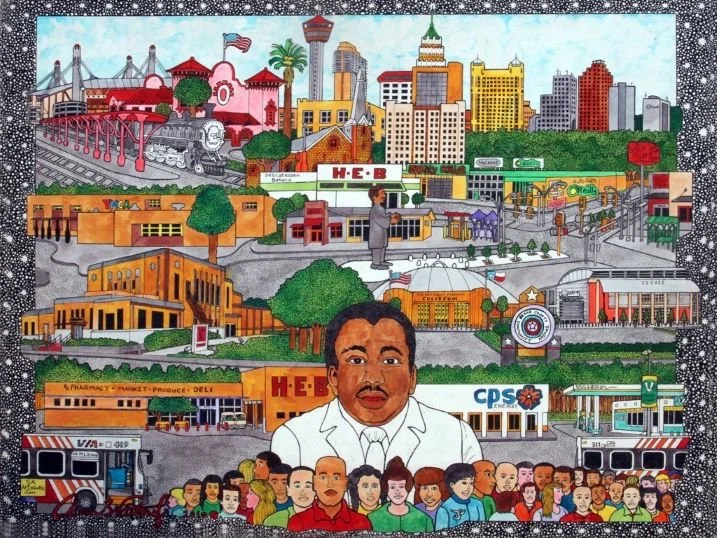
Alongside the markers, SAGE will commission vibrant murals that reflect the stories and contributions of Eastside residents. These murals will be more than just visual art—they will educate, narrate community history, and inspire pride. Through these artistic projects—murals, cultural statues, and historical markers—SAGE aims to transform the Eastside into a cultural landmark that honors its heritage, encourages creativity, and boosts tourism. By involving local artists and the community, this initiative will ensure authentic representation while enhancing the area’s cultural appeal. 


Recommendations

Cultural context statements will include recommendations for survey work priorities, designation priorities, educational outreach such as lectures, historic markers, national register nominations, as well as Office of Historic Preservation initiatives such as There’s a Story Here (TASH), Rehabarama, the Living Heritage Trades Academy, and the Deconstruction and Circular Economy initiative. The following recommendations are intended as a comprehensive component of the strategic plan beyond recommendation for inclusion in individual context statements. They have been compiled based on discussions with cultural groups during the grant period, but also extending at least 5 years past through community meetings and engagement on various preservation topics.  

Learn more
 
Glossary
Bibliography
Appendices